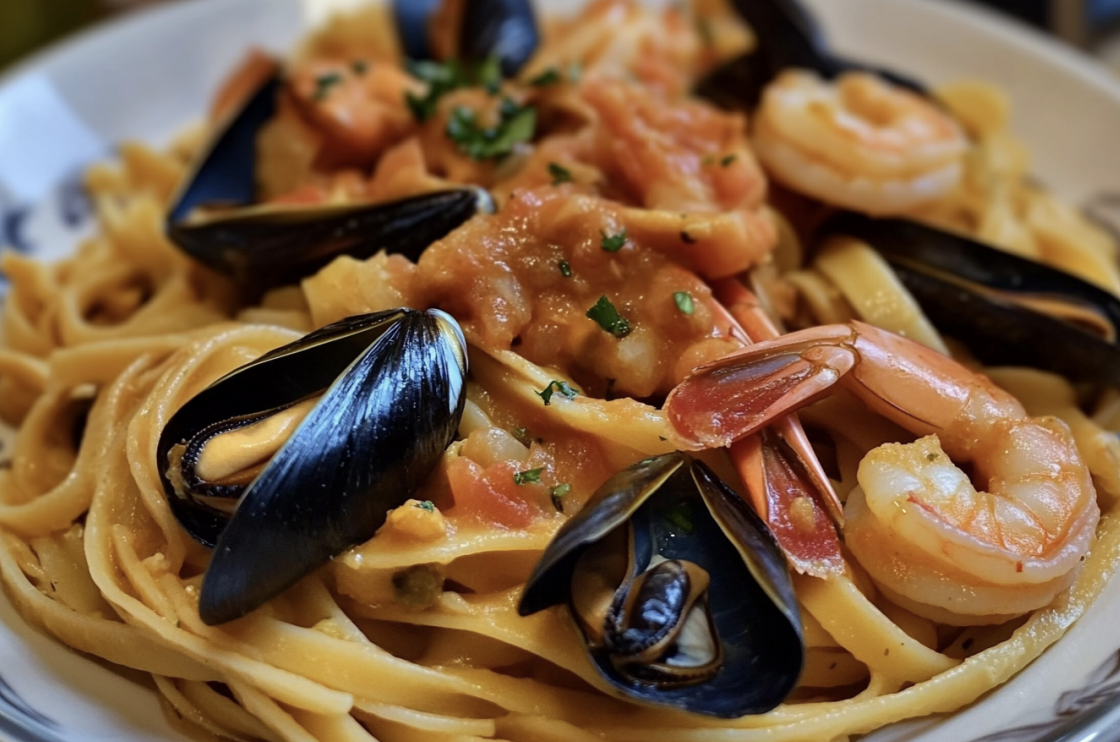
This Seafood Pasta with Linguine, Shrimp, and Mussels is elegant, flavorful, and surprisingly easy to make at home. Tender linguine is tossed with juicy shrimp, briny mussels, garlic, butter, and a light silky sauce that feels both comforting and fresh.
What makes this recipe worth trying is how beautifully the flavors come together. The shrimp stay tender, the mussels add that classic seafood richness, and the linguine soaks up all the garlicky buttery sauce. If you want a seafood pasta that feels restaurant-style but still doable in your own kitchen, this one is a great choice.
Why You’ll Love This Recipe
- Light but satisfying
- Full of fresh seafood flavor
- Perfect for special dinners
- Feels elegant without being too complicated
- Garlic, butter, and broth make a beautiful sauce
- Great for date night or guests
- Easy to customize
- Delicious with crusty bread
- A classic seafood pasta feel
- Impressive but manageable at home
Ingredients You’ll Need
- 12 ounces linguine
- 1 pound shrimp, peeled and deveined
- 1 1/2 to 2 pounds mussels, cleaned and debearded
- 2 tablespoons olive oil
- 3 tablespoons butter
- 5 cloves garlic, minced
- 1 small shallot or small onion, finely chopped
- 1/2 teaspoon red pepper flakes, optional
- 3/4 cup chicken broth, seafood broth, or reserved pasta water
- 1/2 cup dry white wine or extra broth
- 1 tablespoon lemon juice
- 1 teaspoon lemon zest
- Salt, to taste
- Black pepper, to taste
- 1/4 cup chopped fresh parsley
Optional add-ins
- Cherry tomatoes
- Baby spinach
- Parmesan cheese
- Extra butter
- Fresh basil
- Calamari
- Scallops
- Clam juice
- Extra red pepper flakes
Ingredient Notes
Linguine is one of the best pasta shapes for seafood pasta because it is sturdy enough to hold the sauce while still feeling light and elegant. Spaghetti can work too, but linguine gives the dish a slightly more classic seafood-pasta texture.
Shrimp should be peeled and deveined before cooking for the easiest serving. Medium to large shrimp work especially well because they stay juicy and do not overcook too quickly.
Mussels add so much flavor to the sauce, but they need to be cleaned well first. Discard any mussels that are cracked or that stay open when tapped before cooking. After cooking, discard any that do not open.
Garlic, butter, broth, and lemon are what give the sauce its character. The result should feel silky and flavorful, not heavy or overly creamy. White wine adds excellent depth, but broth works if you prefer not to use it.
How to Make
1. Cook the linguine
Bring a large pot of salted water to a boil. Cook the linguine according to package directions until al dente.
Before draining, reserve about 1/2 cup of the pasta water. Then drain the pasta and set it aside.
That pasta water can help loosen the sauce later and helps it cling to the linguine better.
2. Prepare the seafood
Pat the shrimp dry and season lightly with salt and black pepper.
Clean and debeard the mussels, then rinse them well. Throw away any cracked mussels or any that do not close when tapped.
This prep step is important because it makes the final dish cleaner, fresher, and safer to serve.
3. Sauté the aromatics
In a large deep skillet or wide pot, heat the olive oil and 1 tablespoon of butter over medium heat.
Add the shallot or onion and cook until softened. Stir in the garlic and red pepper flakes if using, then cook for about 30 seconds until fragrant.
This creates the flavor base for the whole sauce, so do not rush it.
4. Cook the shrimp
Add the shrimp to the skillet and cook for about 1 to 2 minutes per side, just until pink and nearly cooked through.
Transfer the shrimp to a plate and set aside. They will finish warming later in the sauce.
5. Steam the mussels
In the same skillet, pour in the white wine and broth. Bring it to a simmer, then add the mussels.
Cover the pan and let the mussels steam for about 5 to 7 minutes, shaking the pan once or twice if needed, until they open.
Once opened, remove the mussels with a slotted spoon and set them aside. Discard any that remain closed.
6. Build the sauce
Let the cooking liquid simmer for another minute or two if needed so it reduces slightly.
Stir in the remaining butter, lemon juice, and lemon zest. Taste and add a little salt and black pepper if needed.
The sauce should be light, buttery, and full of seafood flavor.
7. Add the pasta
Add the cooked linguine to the skillet and toss it gently in the sauce.
If the pasta looks dry, add a splash of reserved pasta water until the sauce becomes silky and coats the noodles nicely.
8. Return the seafood
Add the shrimp back to the pan and gently fold in the mussels.
Toss just enough to warm everything through without overcooking the seafood.
9. Finish with parsley
Sprinkle in the chopped parsley and toss one last time.
The parsley adds freshness and helps brighten the whole dish.
10. Serve immediately
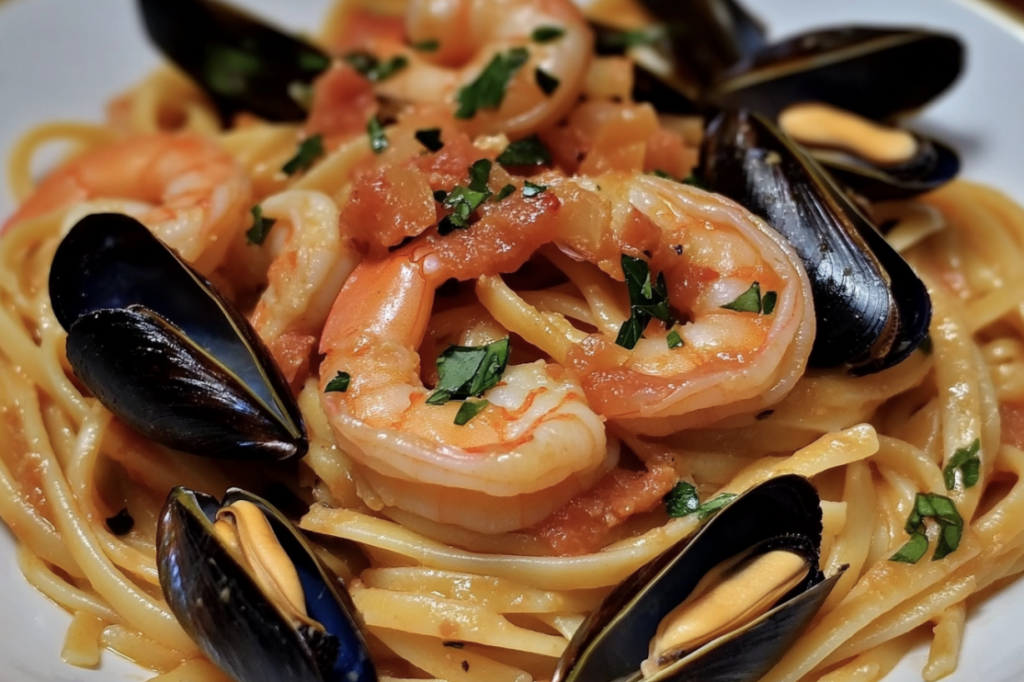
Serve the seafood pasta right away while hot, glossy, and fresh.
You can finish with extra lemon wedges on the side if you like.
Tips for Best Results
Do not overcook the shrimp. They only need a short time in the pan and can become rubbery quickly if left too long.
Check the mussels carefully before and after cooking. Only use mussels that are fresh and safe, and discard any that do not open after steaming.
Salt the pasta water well. Since the sauce is light, properly seasoned pasta makes a big difference in the final flavor.
Use a wide skillet or pot if possible. It gives the mussels room to steam and makes it easier to toss the linguine in the sauce later.
Do not reduce the sauce too much. This is not meant to be a thick sauce. It should stay light and silky so it coats the pasta without becoming heavy.
Add the seafood back only at the end. That keeps the shrimp tender and the mussels from getting tough.
Taste before serving. A little extra lemon juice or black pepper at the end can really wake up the whole dish.
Variations / Substitutions
This Seafood Pasta with Linguine, Shrimp, and Mussels is easy to adapt.
- Add scallops for a richer seafood version
- Add calamari for more texture
- Use clams instead of mussels
- Add cherry tomatoes for freshness
- Stir in spinach at the end
- Use spaghetti instead of linguine
- Add a little cream for a creamier seafood pasta
- Use extra broth instead of wine
- Add fresh basil for a different herbal finish
- Add more red pepper flakes for extra heat
What to Serve With It
This pasta pairs especially well with simple sides that do not overpower the seafood.
- Garlic bread
- Crusty bread
- Caesar salad
- Green salad
- Roasted asparagus
- Steamed green beans
- Lemon wedges
- Roasted zucchini
A crisp salad and some bread are usually all you need to turn it into a full dinner.
Storage and Reheating
- Refrigerator: Store in an airtight container for up to 2 days
- Reheating: Warm gently in a skillet over low heat
- Best tip: Add a small splash of broth or water when reheating
- Freezing: Not ideal, because mussels and shrimp are best fresh
Seafood pasta is always best the day it is made, but leftovers can still be enjoyable if reheated gently.
Common Mistakes to Avoid
One common mistake is overcooking the shrimp. Since shrimp cook quickly, they should be removed from the pan as soon as they turn pink.
Another is not checking the mussels carefully. Freshness matters a lot, and any mussels that stay closed after cooking should be discarded.
Reducing the sauce too much can also make the pasta feel dry instead of silky. This dish works best with a light, fluid sauce.
Finally, do not skip the lemon. It helps brighten the seafood and keeps the buttery sauce balanced.
FAQ
What pasta works best for Seafood Pasta with Linguine, Shrimp, and Mussels?
Linguine is one of the best choices because it holds the sauce beautifully and pairs naturally with seafood.
Can I use frozen shrimp?
Yes, just thaw them fully and pat them dry before cooking.
Can I make this without wine?
Yes, you can use extra broth instead of wine and still get a delicious result.
How do I know if mussels are bad?
Discard any cracked mussels before cooking and any mussels that do not open after cooking.
Can I add cream?
Yes, but this dish is traditionally lighter. A little cream can make it richer if you prefer.
What can I use instead of mussels?
Clams are the closest substitute, but scallops or extra shrimp can also work.
Is this dish spicy?
Only slightly if you use red pepper flakes. You can leave them out or add more depending on your taste.
Can I make it ahead of time?
It is best fresh, since seafood pasta tastes and textures are best right after cooking.
Conclusion
This Seafood Pasta with Linguine, Shrimp, and Mussels is light, elegant, and full of bright savory flavor. The tender linguine, juicy shrimp, briny mussels, and buttery garlic sauce come together into a meal that feels special without needing a long list of complicated steps.
It is a beautiful choice for dinner guests, date night, or anytime you want a seafood pasta that feels fresh, impressive, and deeply satisfying. If you want a classic seafood pasta that is easy to love and worth making again, this one belongs in your rotation.