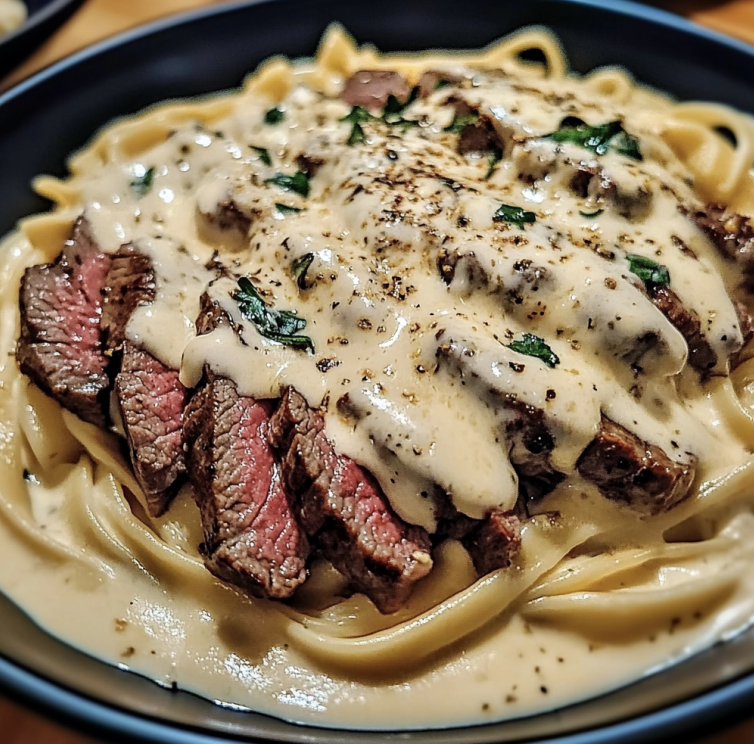
This Olive Garden Steak Gorgonzola Alfredo is rich, creamy, savory, and packed with bold restaurant-style flavor. Tender slices of steak are layered over buttery pasta tossed in a creamy Alfredo sauce, then finished with tangy Gorgonzola and a touch of balsamic-style richness for a dinner that feels indulgent, elegant, and seriously satisfying.
What makes this recipe worth trying is how it balances comfort and flavor. The Alfredo sauce is smooth and rich, the steak adds a hearty bite, and the Gorgonzola gives the dish that bold, slightly tangy finish that makes it stand out from a standard creamy pasta. If you want a steak pasta recipe that feels special enough for a weekend dinner or date night at home, this one is a great choice.
Why You’ll Love This Recipe
- Rich and creamy Alfredo sauce
- Tender steak makes it extra hearty
- Gorgonzola adds bold flavor
- Feels restaurant-style at home
- Great for special dinners
- Comforting and filling
- Easy to customize
- Perfect for steak and pasta lovers
- Great for impressing guests
- Delicious leftover meal
Ingredients You’ll Need
- 12 ounces fettuccine or similar pasta
- 1 pound steak, such as sirloin, strip steak, or ribeye
- 1 tablespoon olive oil
- 2 tablespoons butter
- Salt, to taste
- Black pepper, to taste
- 1 teaspoon garlic powder
- 1/2 teaspoon Italian seasoning
- 3 tablespoons butter
- 3 cloves garlic, minced
- 1 1/2 cups heavy cream
- 1 cup grated Parmesan cheese
- 1/2 cup milk or pasta water, as needed
- 1/2 teaspoon salt
- 1/4 teaspoon black pepper
- 1/2 to 3/4 cup crumbled Gorgonzola cheese
- 1 to 2 tablespoons balsamic glaze or balsamic reduction
- Chopped parsley, for garnish
Optional add-ins
- Baby spinach
- Sun-dried tomatoes
- Extra Parmesan
- Red pepper flakes
- Mozzarella
- Cream cheese
- Sautéed mushrooms
- Roasted asparagus
- Fresh basil
Ingredient Notes
Fettuccine is the classic pasta choice for Alfredo because it holds the creamy sauce beautifully, but other long pasta shapes can also work. If you want something a little sturdier, even penne or rigatoni can hold the sauce well.
The steak is one of the stars of the dish, so using a tender cut makes a big difference. Sirloin is a good balance of flavor and value, while strip steak or ribeye can make the dish feel even richer and more restaurant-like.
Heavy cream and Parmesan create the classic Alfredo base. For the smoothest sauce, freshly grated Parmesan works best because it melts more evenly into the cream. Gorgonzola brings the bold, tangy finish that gives this dish its signature flavor. It is stronger than Parmesan, so a little goes a long way.
Balsamic glaze is optional but highly recommended because it adds a sweet, tangy finish that balances the creamy sauce and rich steak beautifully.
How to Make
1. Cook the pasta
Bring a large pot of salted water to a boil. Add the fettuccine and cook it according to package directions until al dente.
Before draining, reserve about 1/2 cup of pasta water. Then drain the pasta and set it aside.
That pasta water can help loosen the Alfredo sauce later if it becomes too thick.
2. Season the steak
Pat the steak dry with paper towels, then season both sides with salt, black pepper, garlic powder, and Italian seasoning.
Let the steak sit for a few minutes while the pan heats. This helps the seasoning stick better and gives the meat a more even cook.
3. Sear the steak
Heat the olive oil and 2 tablespoons of butter in a large skillet over medium-high heat. Once hot, add the steak and sear it until nicely browned on both sides and cooked to your preferred doneness.
The exact cooking time depends on the thickness of the steak, but the goal is a flavorful crust on the outside and juicy meat inside.
4. Rest the steak
Transfer the steak to a cutting board and let it rest for about 5 to 10 minutes.
This step is important because it keeps the juices in the meat and makes the slices more tender.
5. Start the Alfredo sauce
In a separate large skillet or in the same skillet after wiping out excess grease, melt 3 tablespoons of butter over medium heat. Add the garlic and cook for about 30 seconds, just until fragrant.
Do not let the garlic brown too much, or it can become bitter.
6. Add the cream
Pour in the heavy cream and stir well. Let it warm gently over medium-low heat.
Add the salt and black pepper, then let the sauce simmer softly for a few minutes so it starts to thicken.
7. Melt in the Parmesan
Add the Parmesan cheese gradually, stirring as it melts into the cream.
The sauce should become smooth, rich, and creamy. If it feels too thick, add a splash of milk or reserved pasta water until it reaches the consistency you want.
8. Add the pasta
Add the cooked pasta to the Alfredo sauce and toss until the noodles are coated evenly.
Take your time here so the sauce really clings to the pasta and every strand gets covered.
9. Slice the steak
Slice the rested steak into thin strips or bite-sized pieces.
Thin slices work especially well because they sit nicely over the pasta and make the dish easier to serve and eat.
10. Assemble the dish
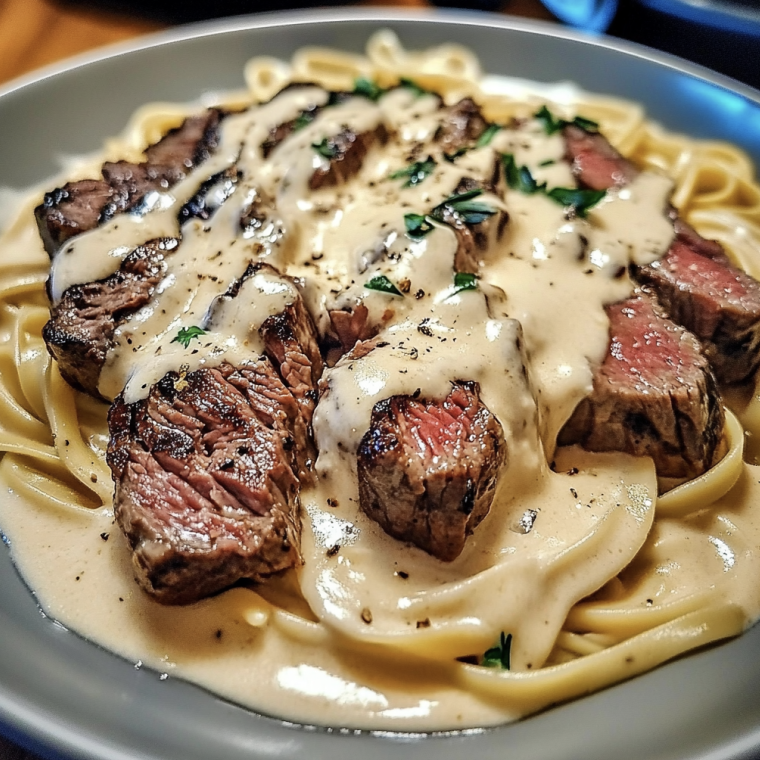
Plate the Alfredo pasta, then arrange the sliced steak over the top.
Sprinkle generously with crumbled Gorgonzola cheese and finish with chopped parsley.
11. Add the final drizzle
Drizzle a little balsamic glaze over the top just before serving.
This extra finishing step helps balance the richness of the cream and cheese and gives the dish that signature steakhouse-style finish.
Tips for Best Results
Let the steak come closer to room temperature before cooking if you have time. This helps it cook more evenly and can improve the final texture.
Do not overcrowd the skillet when cooking the steak. A crowded pan can steam the meat instead of giving it a nice sear.
Always rest the steak before slicing. Cutting it too early can let the juices run out and leave the meat less tender.
Use medium-low heat for the Alfredo sauce once the cream is in the pan. Gentle heat keeps the sauce smoother and helps the cheese melt in without turning grainy.
Add the Parmesan gradually instead of all at once. This helps it blend more evenly and keeps the sauce silky.
Start with a smaller amount of Gorgonzola if you are unsure how strong you want the flavor. You can always add more on top.
If the sauce thickens too much after adding the pasta, use a little reserved pasta water to loosen it and bring it back to a smooth, glossy texture.
Variations / Substitutions
This Olive Garden Steak Gorgonzola Alfredo can be adjusted in a few easy ways.
- Use chicken instead of steak
- Add spinach for a little freshness
- Add sun-dried tomatoes for extra flavor contrast
- Use blue cheese if Gorgonzola is unavailable
- Swap fettuccine for penne or rigatoni
- Add mushrooms for more savory depth
- Use half-and-half instead of heavy cream for a lighter sauce
- Add mozzarella for extra melt
- Add red pepper flakes for a little heat
- Serve with roasted asparagus for a fuller plate
What to Serve With It
This pasta is rich and indulgent, so lighter sides work especially well.
- Caesar salad
- Garlic bread
- Roasted asparagus
- Green beans
- Steamed broccoli
- Side salad
- Roasted mushrooms
- Dinner rolls
A crisp green salad or simple roasted vegetable is especially good because it balances the creamy pasta nicely.
Storage and Reheating
- Refrigerator: Store in an airtight container for up to 3 days
- Reheating: Warm gently in a skillet or microwave
- Best tip: Add a splash of milk, cream, or broth before reheating to loosen the Alfredo sauce
- Freezing: Not ideal, because Alfredo sauces can change texture after thawing
For best texture, reheat slowly and avoid overheating the steak so it stays more tender.
Common Mistakes to Avoid
One common mistake is overcooking the steak. Since it continues resting after cooking, it is better to pull it from the pan at the right time rather than leaving it too long.
Another is making the Alfredo sauce over heat that is too high. That can affect the texture and make the sauce feel heavier or less smooth.
Adding too much Gorgonzola at once can also overpower the dish. Since it is a strong cheese, it works best when balanced with the creamy Alfredo.
Finally, do not skip the balsamic glaze if you want the full flavor experience. That little sweet tangy finish really helps bring everything together.
FAQ
What kind of steak works best for Olive Garden Steak Gorgonzola Alfredo?
Sirloin, strip steak, or ribeye are all great choices. Tender cuts work best because they slice nicely and stay juicy.
Is Gorgonzola very strong?
Gorgonzola has a bold tangy flavor, but when used with creamy Alfredo and steak, it balances beautifully. You can start with less and add more if needed.
Can I make this recipe without balsamic glaze?
Yes, but the glaze adds a sweet tangy finish that really helps balance the richness of the dish.
What pasta works best?
Fettuccine is the classic choice, but linguine, penne, or rigatoni can also work well.
Can I use chicken instead of steak?
Yes, grilled or pan-seared chicken works very well if you want a different version.
Can I make it ahead of time?
It is best fresh, but leftovers can be reheated gently with a splash of milk or cream.
What if my Alfredo sauce gets too thick?
Add a little milk, cream, or reserved pasta water and stir until it loosens.
Can I add vegetables?
Yes. Spinach, mushrooms, sun-dried tomatoes, or asparagus all work nicely.
Conclusion
This Olive Garden Steak Gorgonzola Alfredo is rich, creamy, bold, and full of the kind of flavor that makes a pasta dinner feel truly special. The tender steak, silky Alfredo sauce, tangy Gorgonzola, and sweet balsamic finish all work together in a way that feels indulgent and restaurant-worthy.
It is a wonderful recipe for date nights, weekend dinners, or anytime you want to make something a little more impressive without getting too complicated. If you want a steak pasta dish that feels elegant, hearty, and deeply satisfying, this one is absolutely worth making.